
Celebrating 55 years of Plant Health Research
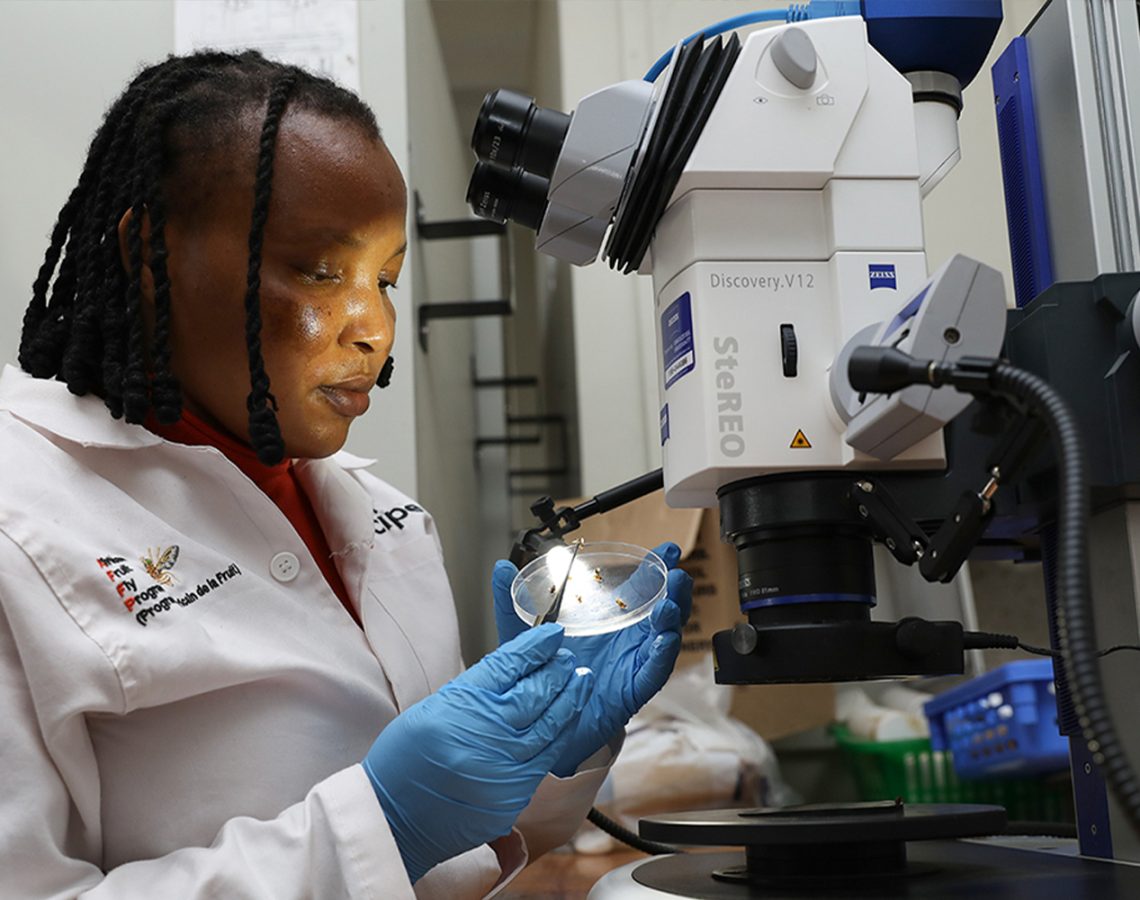
On 12 May 2025 – the world celebrates the International Day of Plant Health, under the theme: The Importance of Plant Health to One Health. icipe‘s is distinct, with R4D activities across Plant Health, Human Health, Animal Health, and Environmental health. Thus, our approach is emblematic of the theme – The Importance of Plant Health on One Health.
At the International Centre of Insect Physiology and Ecology (icipe), we use this occasion to reflect on our plant health research over the past 55 years. In close alignment to the
At the heart of all our activites is the wellbeing of smallholder farmers, aiming to provide them with yield-improving, integrated pest management (IPM) strategies that are environmentally safe, as well as economically and technically feasible.
The core of icipe plant health research is biological control, around three thrusts. First is conservation biological control, includes habitat management and behavioural manipulation based on intricate knowledge of chemical ecology and insect-plant tri-trophic interactions. The most outstanding example in this regard is the push-pull technology (http://www.push-pull.net/). Climate-smart technologies and adaptation strategies have been designed, including a climate-smart version of push-pull technology.
Second, classical biological control (the introduction of a natural enemy of exotic origin to control a pest) activities has become a powerful tool to address invasive pests like: the notorious fruit fly species Bactrocera dorsalis; Tuta absoluta, a highly destructive pest of tomato plants and fruit; Chilo partellus, a damaging stemborer of cereals; the diamondback moth, Plutella xylostella, a pest of all brassica crops; and Liriomyza leafminers, pests of many vegetable and flower crops.
Third is icipe’s efforts in augmentative biological control that have concentrated on the formulation of microbes, mainly fungi, into powerful biopesticides against numerous horticultural and staple crop pests.
In-depth knowledge of the biology and taxonomy of pests has also been generated as a vital foundation for IPM programmes, especially for species complexes such as tephritid fruit flies, cryptic species such as thrips and vector-borne diseases such as citrus greening. Through careful morphometrics, molecular biology, chemo-taxonomy and physiology, the identities of a diverse array of pests are revealed.
Leave a Reply